Software Development

Advancing collection-based evolutionary biology through seamless data integration and accessible genomic software, from the field to the museum to publication.

Code metrics

Live from GitHub · updated Oct 8, 2026

Contributions
3,720
Commits
6,847
Lines added
1.1M
Lines removed
534.8K
Repositories
82
Pull requests
123
Reviews
36
Day streak
40

Language mix

Share of code across public repositories, by bytes.

  • Rust 59.0%
  • Dart 16.3%
  • Astro 7.7%
  • Python 5.6%
  • Shell 3.1%
  • TypeScript 2.6%
  • C++ 2.5%
  • Other 3.2%

Most active on Saturday (18%) , mostly in the Afternoon .

Selected repositories

Featured projects and their language composition.

  1. nahpu/nahpu

    A cross-platform (mobile and desktop) digital catalog app for natural history collections

    • Dart 93.6%
    • Rust 3.5%
    • Roff 2.2%
    • Other 0.8%
  2. hhandika/segul

    An ultrafast and memory efficient tool for phylogenomics

    • Rust 99.9%

    1,652 commits · +84.5K −66.2K

  3. hhandika/segui

    A GUI version of the SEGUL phylogenomic tool

    • Dart 66.2%
    • Rust 18.7%
    • C++ 3.4%
    • CMake 3.2%
    • Other 8.5%

    982 commits · +173.6K −80.9K

  4. hhandika/ullar

    A lightweight phylo and population genomic pipeline designed from the ground up for efficiency and ease of use

    • Rust 100.0%

    599 commits · +53.2K −32.1K

  5. mammaldiversity/mdd_app

    An app for viewing mammal diversity database

    • Dart 85.2%
    • Rust 6.7%
    • C++ 2.9%
    • CMake 2.3%
    • Other 2.9%

Public repositories only; code changes cover 81 of 82 repositories. Source: hhandika/hhandika.

Software Projects

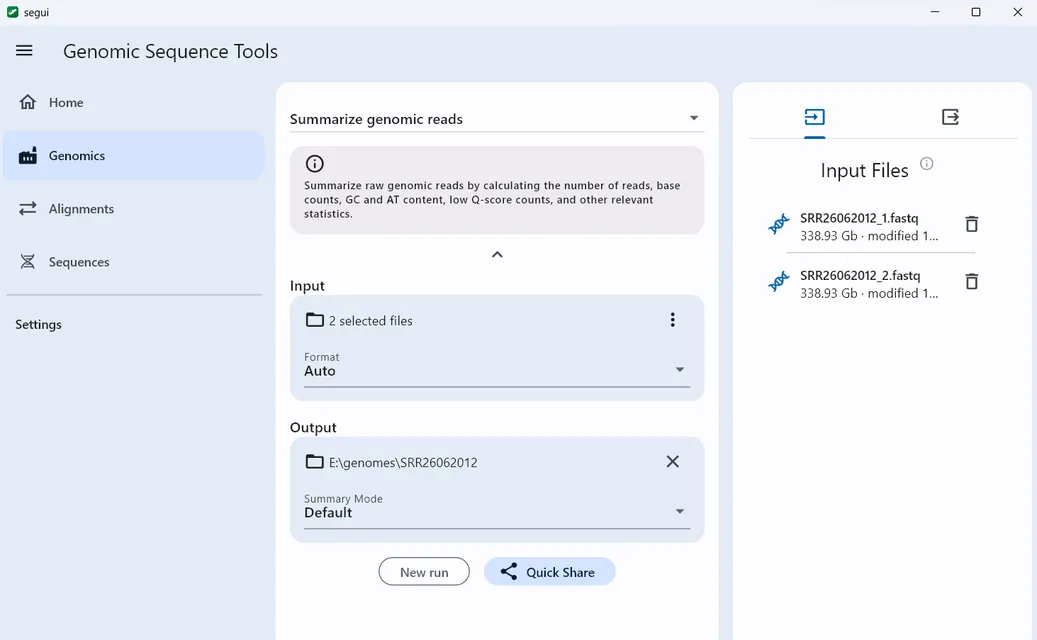
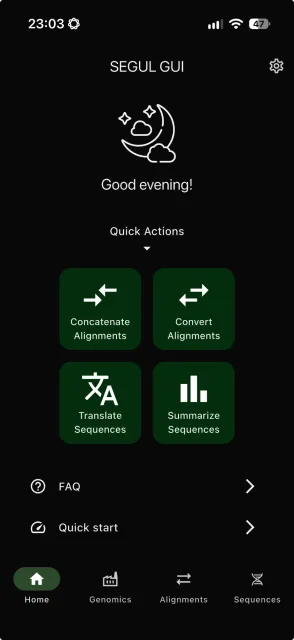
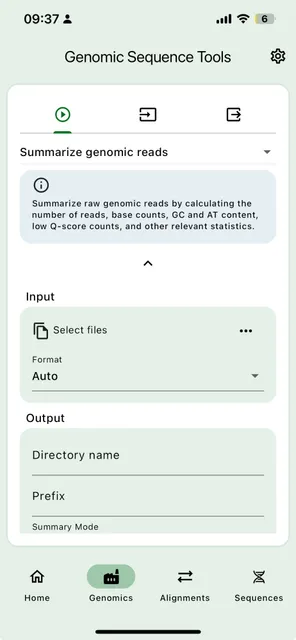
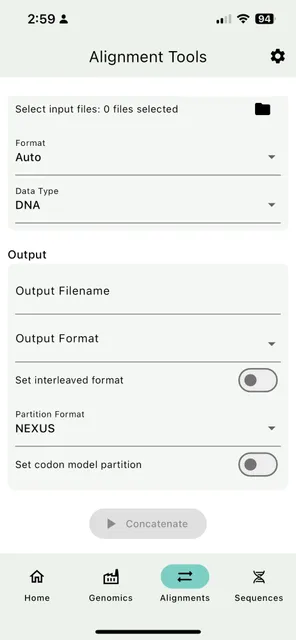
SEGUI on Windows summarizing genomic reads SEGUI home screen on iPhone in dark mode SEGUI genomic sequence tools on iPhone SEGUI alignment concatenation on iPhone

SEGUL

A cross-platform phylogenomic tool

Desktop GUIMobile appCommand-line appPython packageRust crate

We develop SEGUL (SEquence and Genomic UtiLities) to address the need for a high-performance and accessible phylogenomic tool. It features a growing list of high-performance, memory-efficient solutions for genomic data exploration, cleaning, filtering, and conversion tasks. We designed SEGUL to handle large-scale phylogenomic datasets involving thousands of loci and hundreds of samples. Additionally, it is capable of handling small Sanger sequences effectively. It scales from smartphones, tablets, and personal computers to high-performance computing clusters. It is available as a command-line app, mobile and desktop GUI, and packages for Rust and Python. Using the SEGUL library in other languages is also possible using the Rust interface, such as in R using extendr. It is a practical solution to typical phylogenomic data analyses and a proof of concept for scalable, cross-platform genomic software. SEGUL received the Society of Systematic Biologists' 2024 Ernst Mayr Award.
Code Docs Install

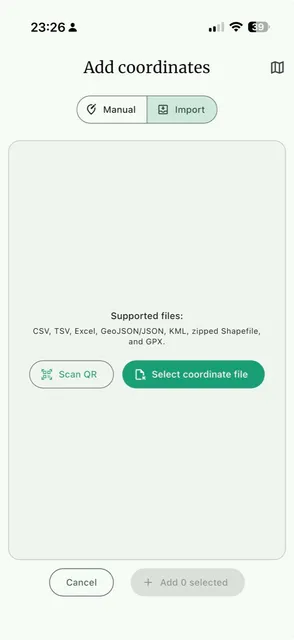
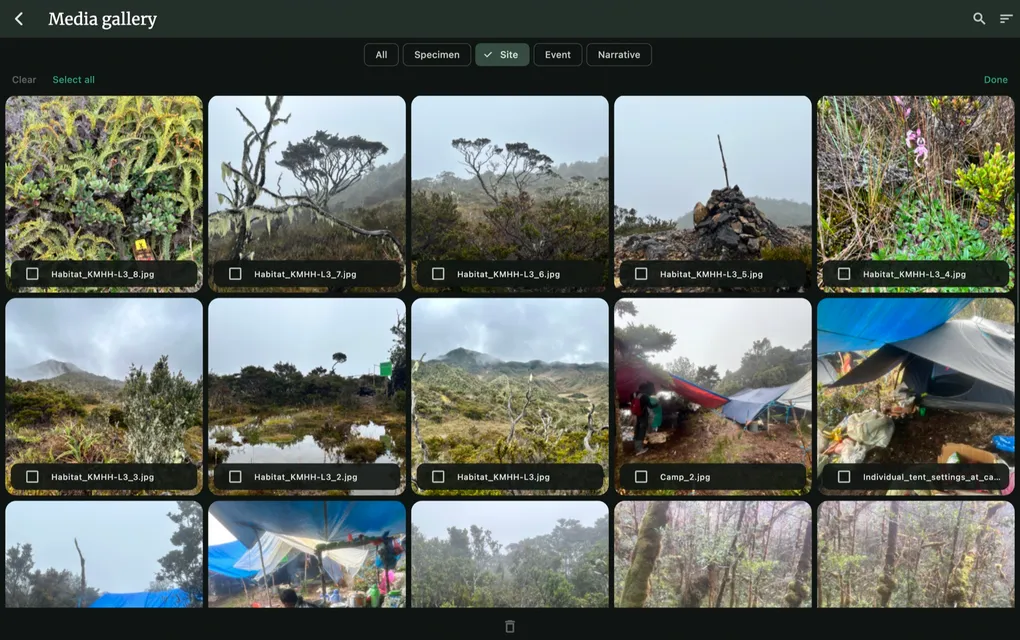
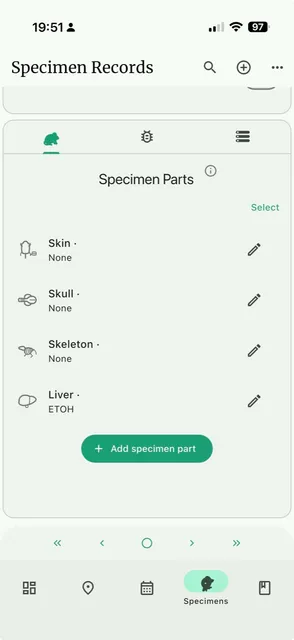
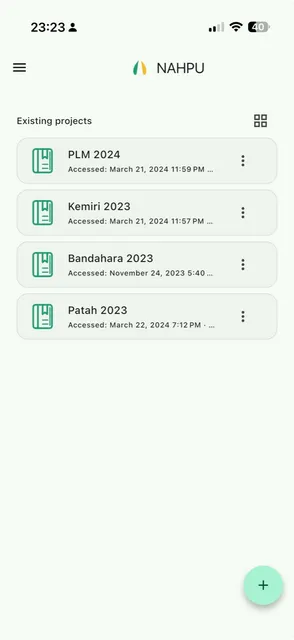
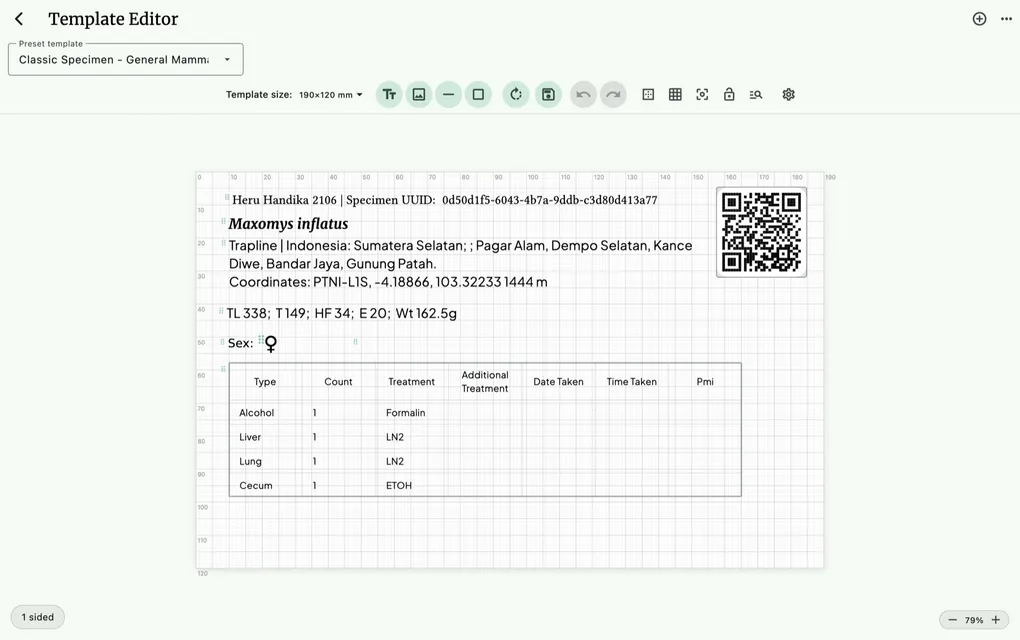
NAHPU home screen on a phone NAHPU catalog template design on macOS Recording collecting-site coordinates in NAHPU NAHPU media gallery for specimen photographs Specimen part records in NAHPU

NAHPU

A cross-platform field catalog for natural history collections

Mobile appDesktop app

The NAHPU project is a collaborative effort to develop a digital field catalog for natural history collection. We designed it to streamline data collection from fieldwork to the museum database. It minimizes information loss and lack of integration between specimens, collecting efforts, and derivative data (e.g., photographs and sound recording). We aim to foster international collaboration and improved reproducibility through rich, consistent data features and multi-language support. NAHPU features real-time statistics to keep track of specimen records to aid in making decisions in collecting efforts and avoiding over-sampling. The app is stable. Field teams have used NAHPU for fieldwork in Brazil, Colombia, Indonesia, Mexico, and the United States. It supports data collection for ornithology and mammalogy, with plans to extend support to other taxa.

Code Docs Install

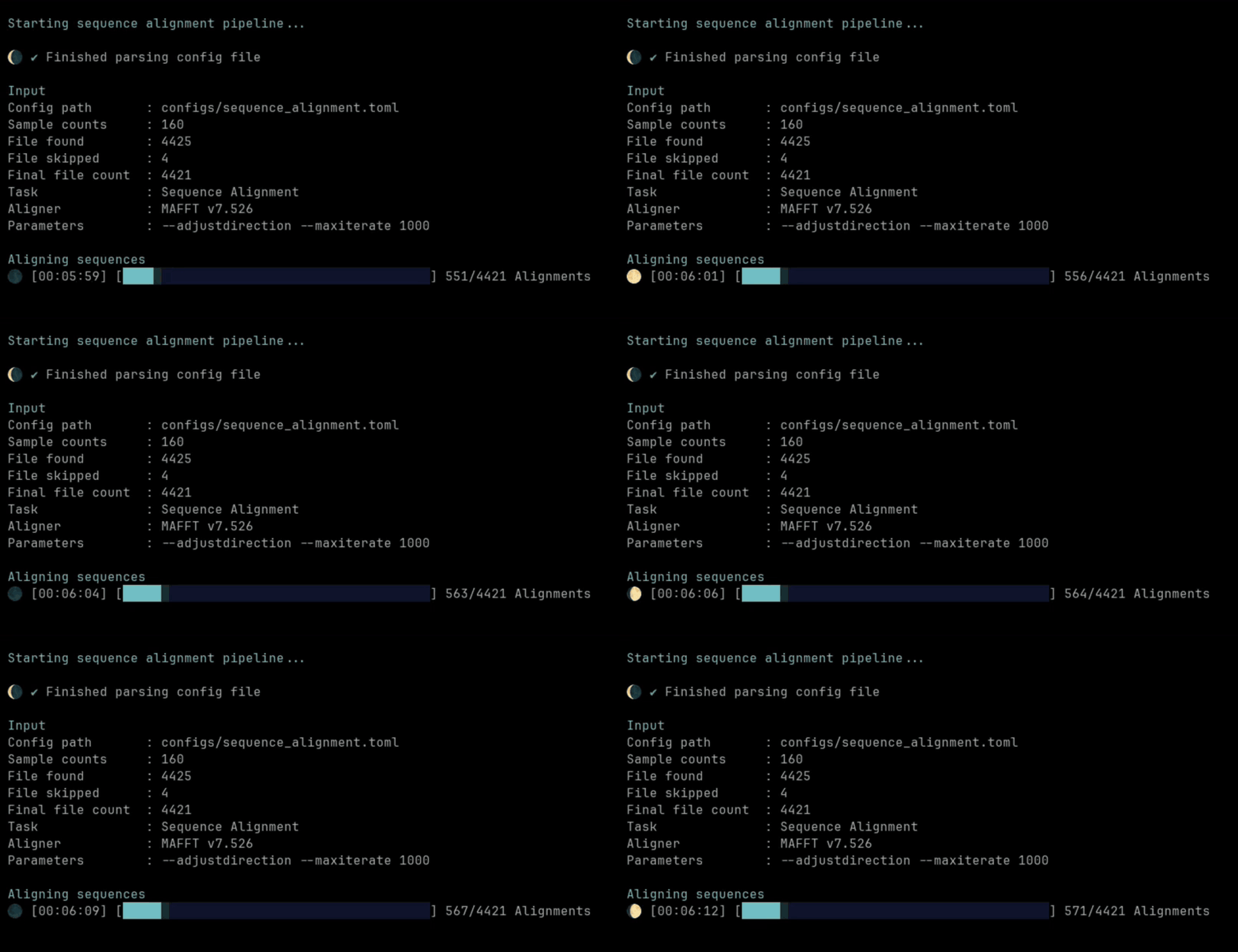
ULLAR running a MAFFT sequence alignment pipeline on 4,421 loci in the terminal

ULLAR

An Ultrafast, scaLable, Accessible, and Reproducible pipeline for phylogenomics

Command-line appPython package

ULLAR is currently in the beta development stage. It aims to create a lightweight and scalable pipeline for phylogenomic studies. It requires minimal learning and omits manual config generation and shell scripting. The pipeline uses Rust, which has no runtime dependencies, is memory-safe, and efficiently uses computing resources. In addition to Linux and macOS, typically supported operating systems for bioinformatics, ULLAR will also run natively on Windows for part of the pipeline, allowing more efficient access to hardware than using the Windows Subsystem for Linux.

Code Docs Install

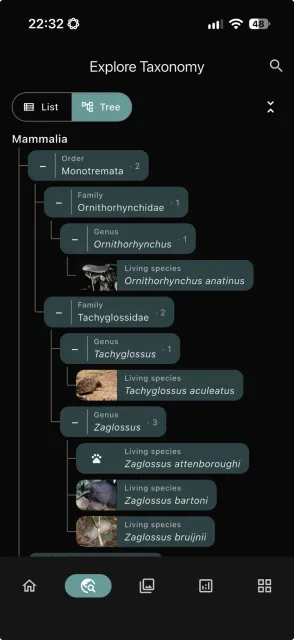
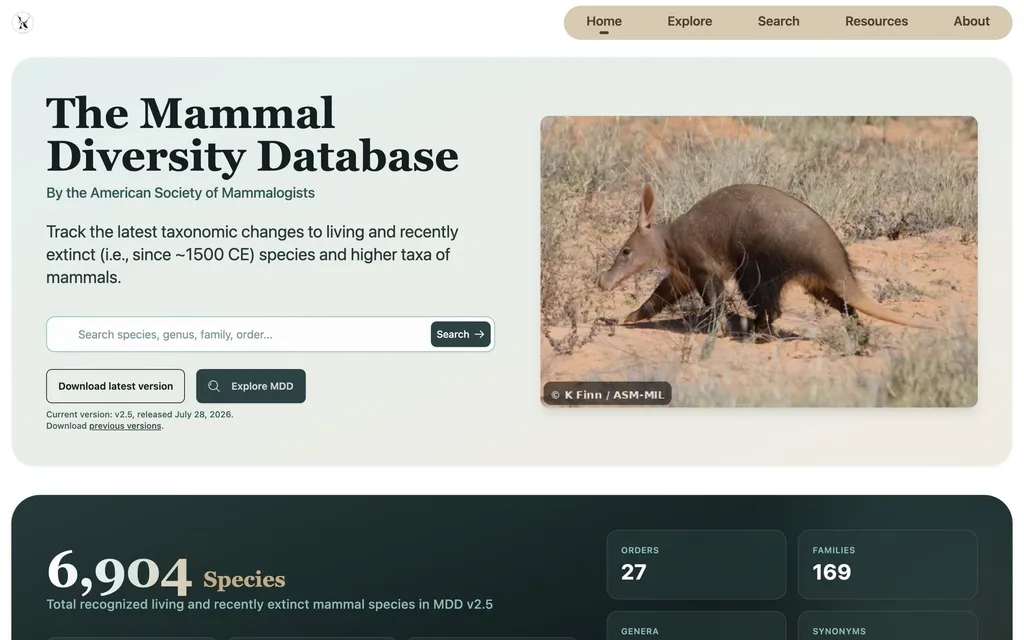
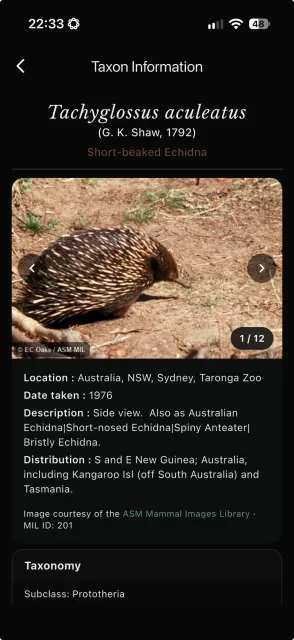
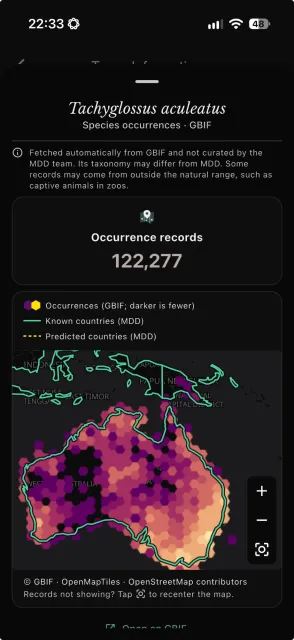
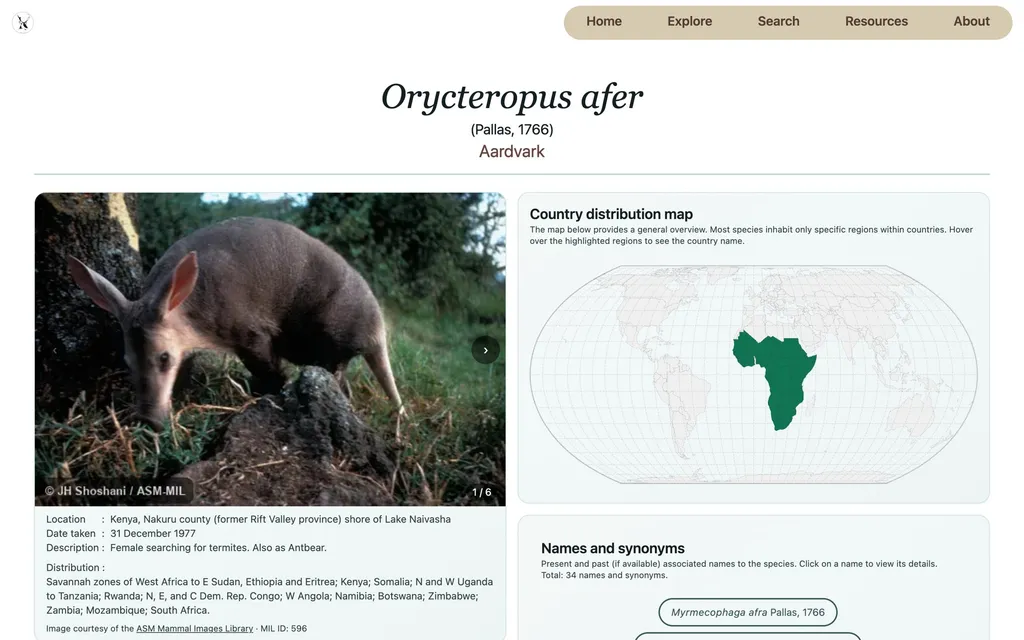
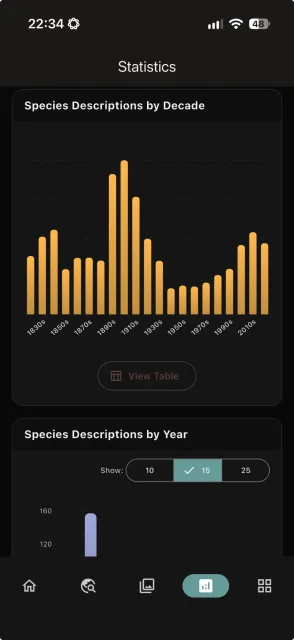
MDD app taxonomy tree MDD website home page Species information in the MDD app Occurrence map in the MDD app Taxon page on the MDD website Database statistics in the MDD app

MDD app

Mobile, desktop, and web apps for the ASM's Mammal Diversity Database

Mobile appDesktop appResponsive website

The American Society of Mammalogists' Mammal Diversity Database (MDD) app is a mobile and desktop application I developed as part of the MDD curation team, together with the responsive MDD website that works on phones, tablets, and desktops. The app is stable. It allows offline access, advanced search, and user-selected export functions for the database. We aim to simplify access to MDD data when access to the internet is limited.

Code Docs Install

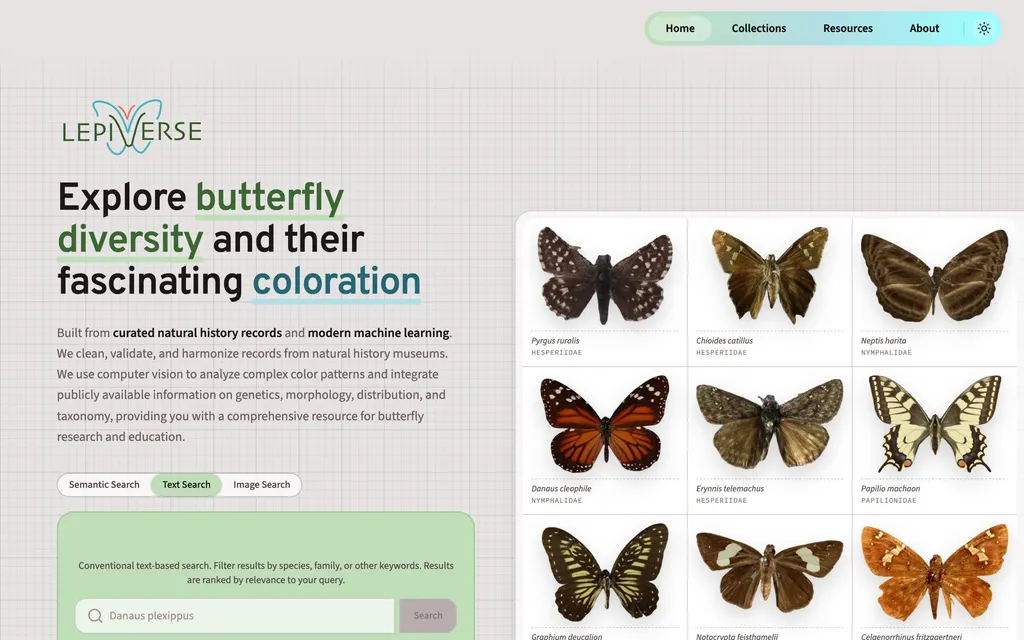
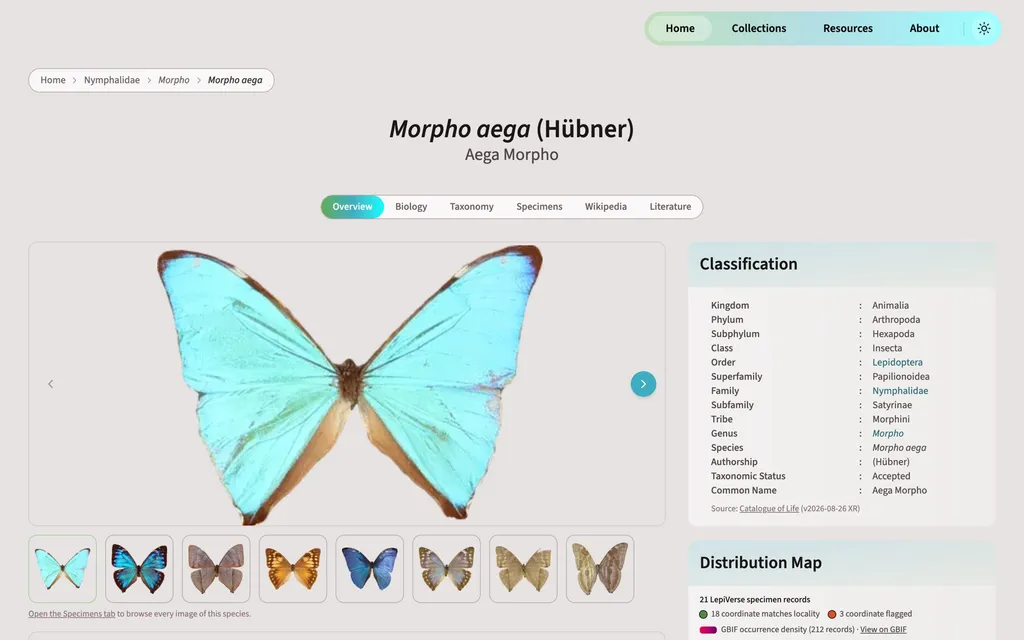
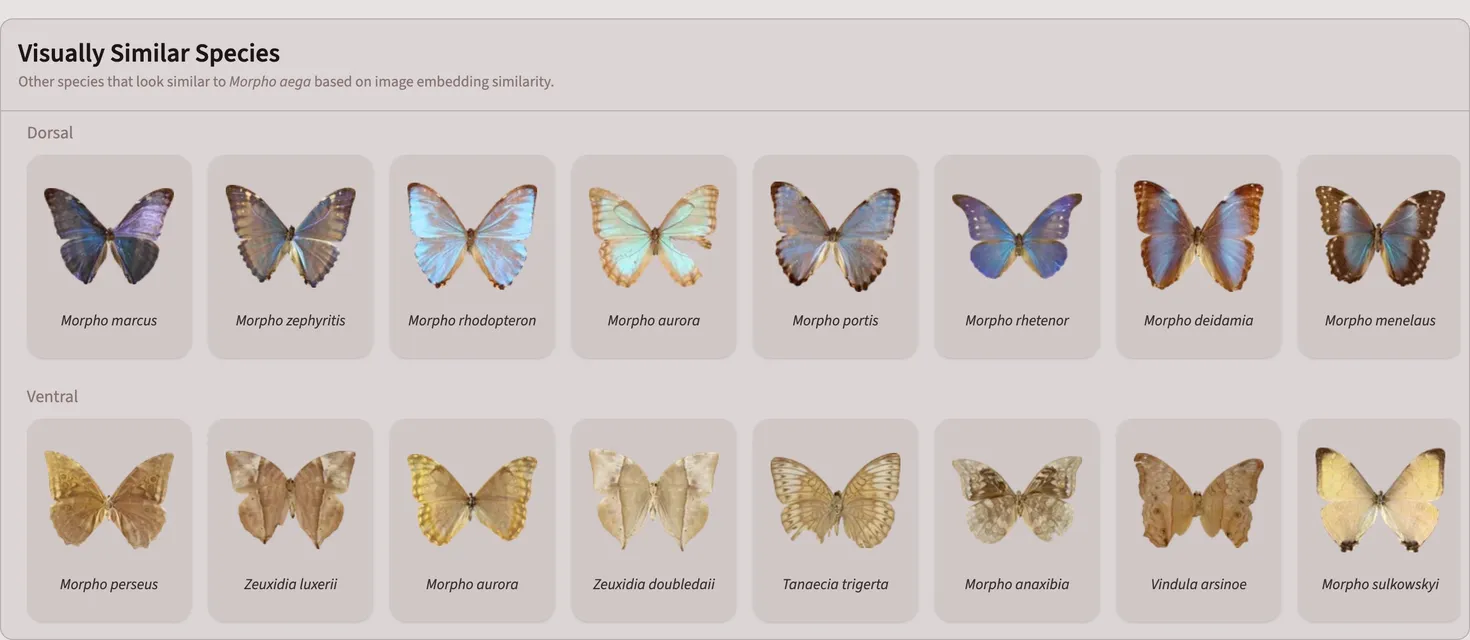
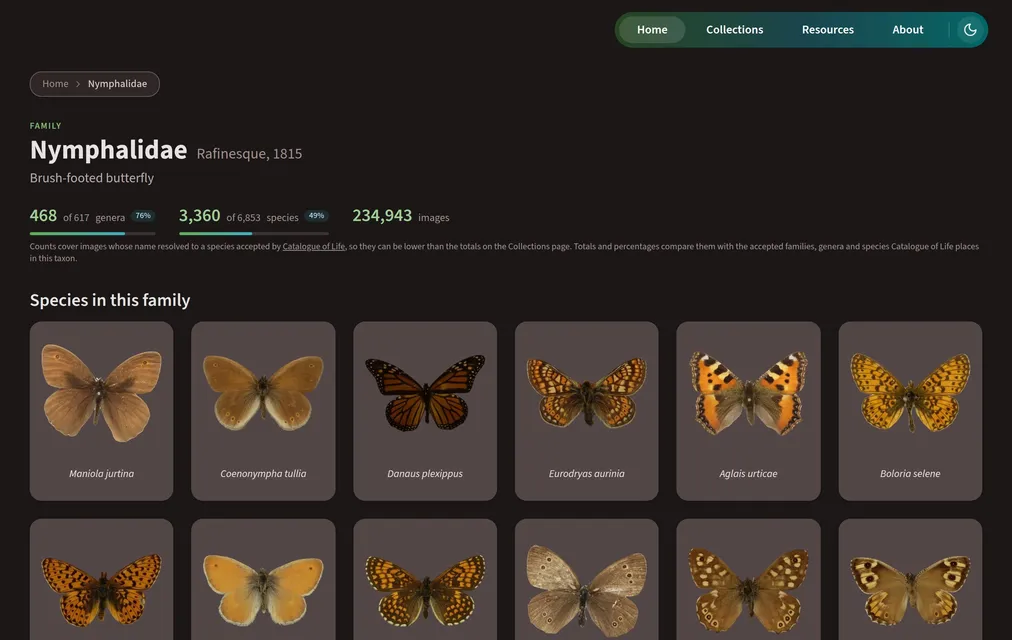
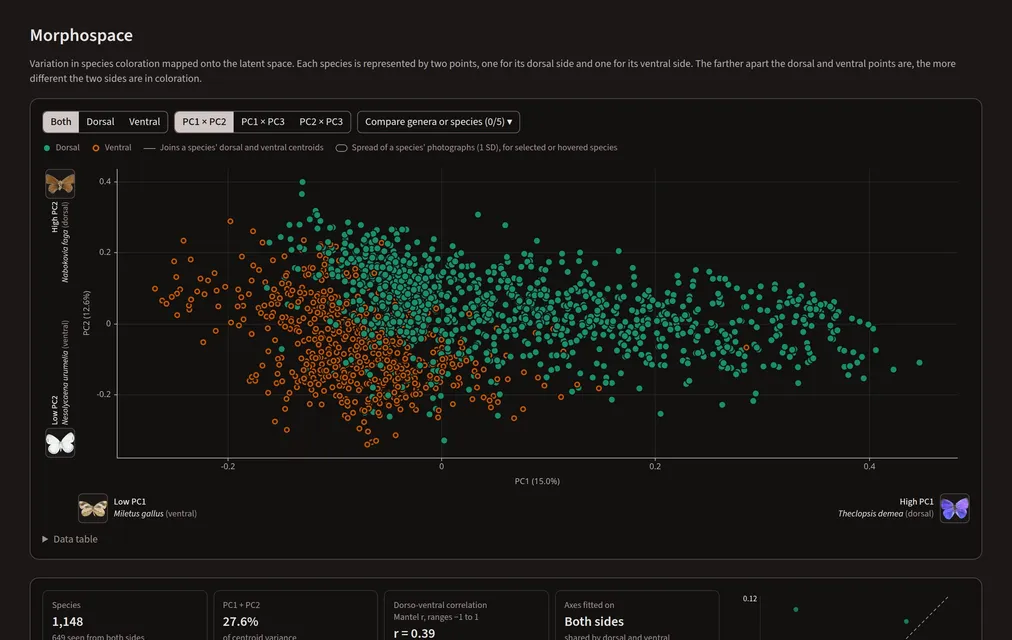
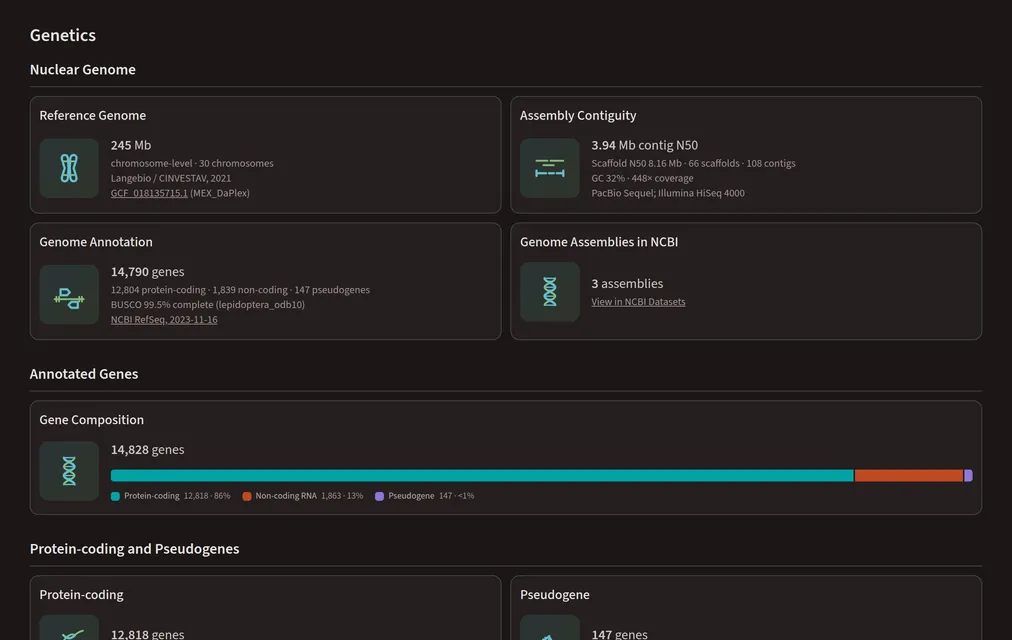
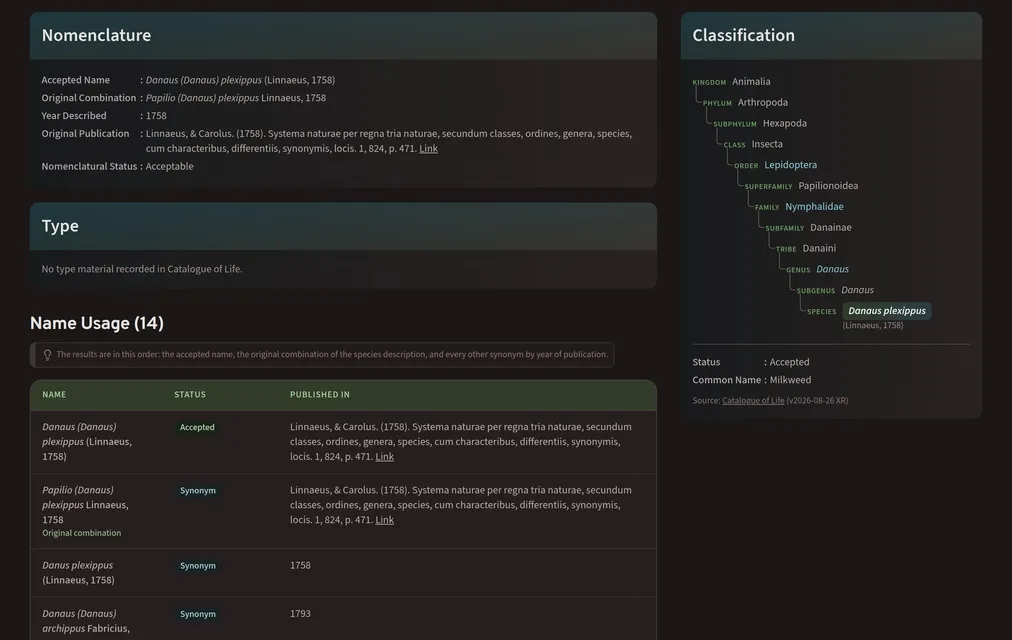
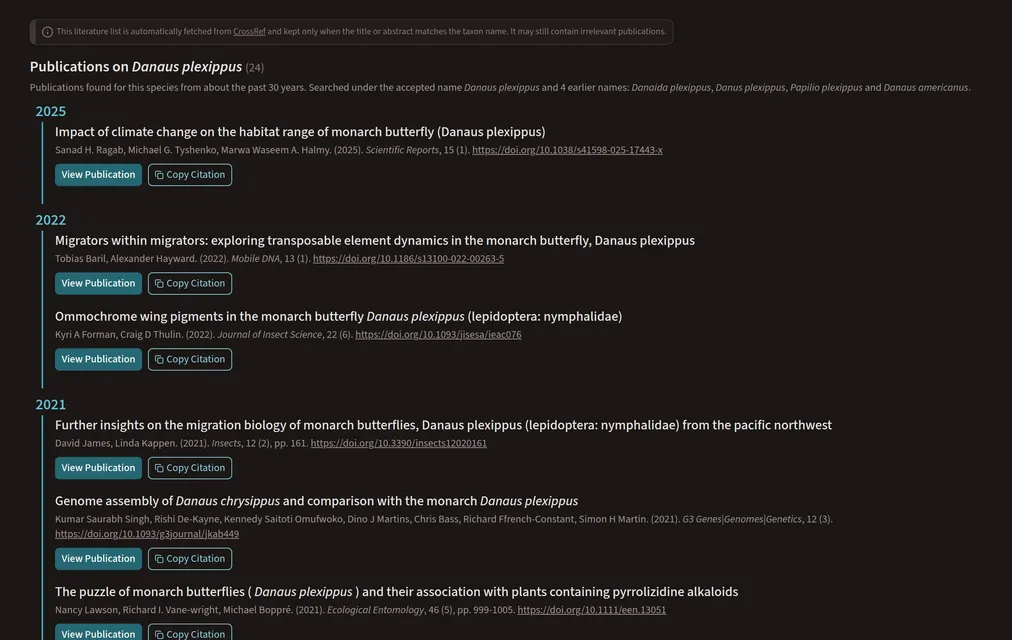
LepiVerse home page, built on BioCosmos LepiVerse species page for Morpho aega with specimen images and classification Visually similar species to Morpho aega ranked by image embedding similarity LepiVerse Nymphalidae family page in dark mode with genus, species, and image counts Coloration morphospace of Lycaenidae, with dorsal and ventral points for each species on the first two principal components Genetics section for Danaus plexippus summarizing the reference genome, assembly, and gene annotation Taxonomy section for Danaus plexippus with nomenclature, classification, and name usage Literature section listing publications on Danaus plexippus by year

BioCosmos

AI-powered search and trait exploration for natural history collections

Web appAPI server

BioCosmos is the platform behind LepiVerse. It lets anyone search more than 600,000 butterfly specimen images by name, image, or a plain-language question. An open-weight language model plans each search as typed tool calls, vision models encode it, and two embedded databases, DuckDB and LanceDB, execute it in a single lightweight server. The language model never touches the data, keeping token usage low and the data private.

Code Docs Install